Our mission is to build a supportive community of caregivers through accessible and inclusive opportunities with resources that connects families navigating the needs of their child in any therapy, regardless of diagnosis.
Browse through our resource library with links to information about therapy, helpful websites and organizations, diagnosis specific support groups, local community resources, and more! You can also review our directory of C.I.T.Y. sponsors, and find loads of tips and support in our blog, newsletter, and free e-learning portal!
An Overview of Co-Regulation for Parents and Professionals
Guest blog contributed by: Nadia A. Flodstrom, M.S., OTR/L, RYT-200, RCYT an occupational therapist, registered yoga teacher (RYT-200), and registered children’s yoga teacher (RCYT) with more than a decade of experience supporting individuals with disabilities. She founded CNTR Yoga in Deerfield to provide inclusive yoga for people of all ages and abilities and also works at a clinic in Lake Zurich focused on bridging service gaps across the lifespan. Join Nadia as she hosts a FREE, live hybrid discussion on Thursday, September 10th from 7:00-8:00pm in-person at the GENEROC.I.T.Y. Shop(with free childcare available) and via zoom. Everyone is welcome, but registration is required.Register here to participate in-person and Register here to participate on zoom. Professionals: this webinar has also been submitted for Early Intervention credit.
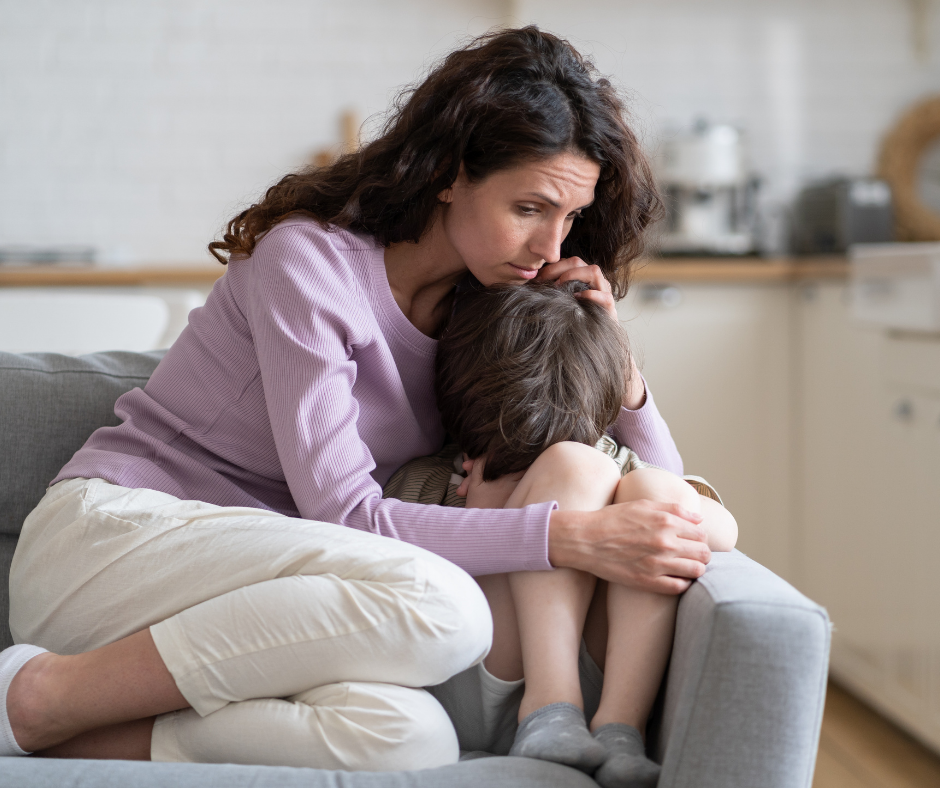
Co-regulation is a hot topic at the moment. I see an array of blogs, posts on social media, books, research articles, and presentations being given on co-regulation. A quick search will show you many definitions of co-regulation. From, “an exchange of calm that occurs between two people”; “the mutual adaptation between partners in response to one another’s biology and behavior”, to “the way that the nervous system of one individual influences the nervous system of another“ or “connecting with a child who’s in distress and being able to evaluate what that child needs in the moment to help calm themselves.” No matter how you define co-regulation, the common thread between all of the definitions is…“Co-regulation begins with self-regulation” – The Child Mind Institute
When reflecting on co-regulation, I think back to my yoga training where my yoga teacher, Sonia Sumar, the founder of Yoga for All Abilities, said “we can’t teach what we don’t have”.
I’d like to take this a step further when talking about regulation and say, “we can’t teach what we have not experienced for ourselves.” Being regulated, calm, and feeling safe, is more complex than an individual feeling that we can label. It is the experience of our brain, nervous system, physical body, and breath responding to the environment around us. The biological and behavioral.
Before we dive into these processes, I’d like you to close your eyes and think of a time when you were on a vacation with no worries. No responsibilities. Where you could just sit, relax, and observe the beauty of the world around you. Can you picture it in your mind? What feelings come to mind? What sensations? What do you see…hear…taste…smell…feel?
Our environment has a much bigger impact on our own regulation than we consciously realize, because feeling safe and connected is more than just a feeling. It is a learned and repeated response. Our defensive patterns have been learned from an early age, and recognizing our own defensive pattern and those of the individuals we serve is the key to co-regulation.
“Coregulation is a multi-level phenomenon, taking place at hormonal and sympathetic nervous system, autonomic nervous system, and central nervous system levels as well as at brain-to-brain levels.” – Bornstein MH, Esposito G
In infants and young children, the brain’s hormone levels and nervous system responses mirror those of their mothers or caregivers. For instance, cortisol levels, the stress hormone, in mothers and infants, preschoolers, and adolescents are synchronized. The stress caregivers feel is being shared and mirrored in their children. This could have been beneficial in the past on an evolutionary level, just like our nervous system’s responses.
To better understand self-regulation, we first need to understand the nervous system. The nervous system is divided into two main parts: the central nervous system, which consists of the brain and spinal cord, and the peripheral nervous system, which includes the sensory and motor systems, as well as the somatic and autonomic nervous systems. The autonomic nervous system is further divided into the parasympathetic, sympathetic, and enteric nervous systems.
The peripheral nervous system, along with the cranial and spinal nerves, provides a bidirectional feedback system between the brain and the body. Our brain receives information from the external environment through our senses and from our internal environment through various processes that can elicit a sense of safety or threat. When our body senses a safe and comfortable environment, the parasympathetic nervous system (rest and digest) can become more dominant. Conversely, when we sense danger, the sympathetic nervous system responds, triggering a fight, flight, or freeze response.
These responses can be triggered by stress, even when the situation isn’t life-threatening. In this modern day and age, this response can be triggered by driving, something we watch, read, interact with, hear, and more. Newer research even suggests that young children can have a sympathetic nervous system response to watching overstimulating content with rapidly flashing images. What we consume and surround ourselves with matters.
Self-regulation is not innate; it’s a set of skills everyone must learn.” – The Child Mind Institute
So you’re probably wondering, what can we do to foster co-regulation? There are several widely accepted self-regulation and co-regulation strategies that we can use.
Co-Regulation Strategies:
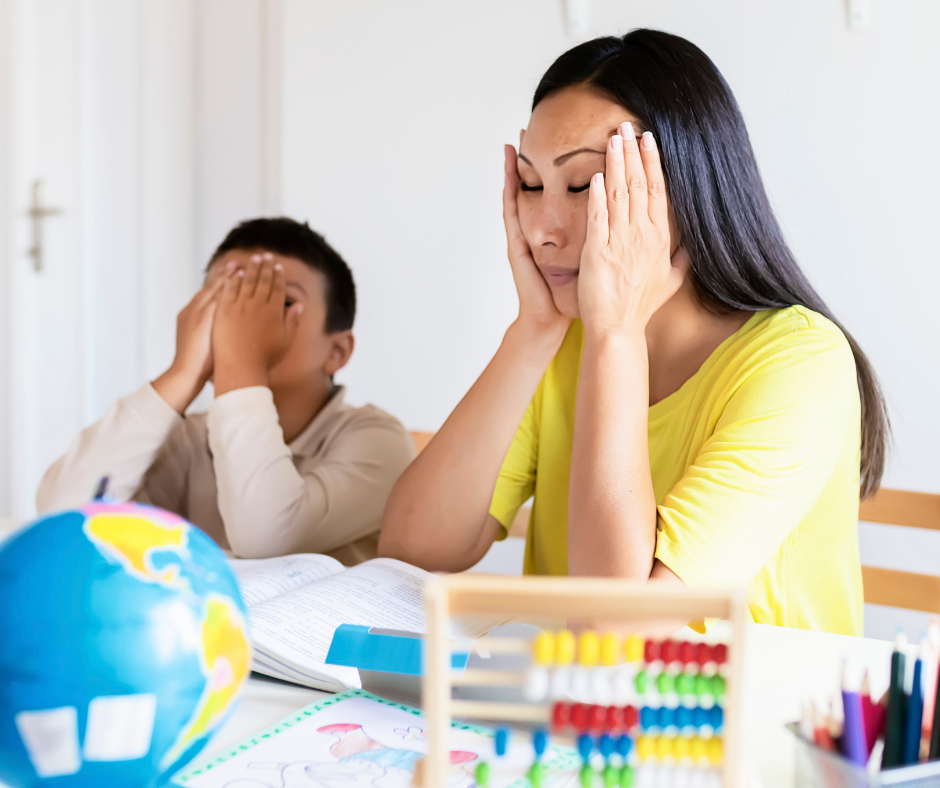
1. Pause and take a moment before you react. As adults, we need a moment to connect with ourselves and our emotions. This can look like taking a deep breath, counting to 10, walking away for just a moment, catching yourself feeling tense, stopping yourself before you yell or correct, whatever works for you.
2. Connect using empathy and acknowledging the emotion first, appealing to the emotional part of the brain.
3. Use a gentle tone of voice to comfort and redirect once the child is more receptive
4. Name the emotion. After connecting and acknowledging the feelings, have the child retell the story and problem solve a solution for the future once they are calm.
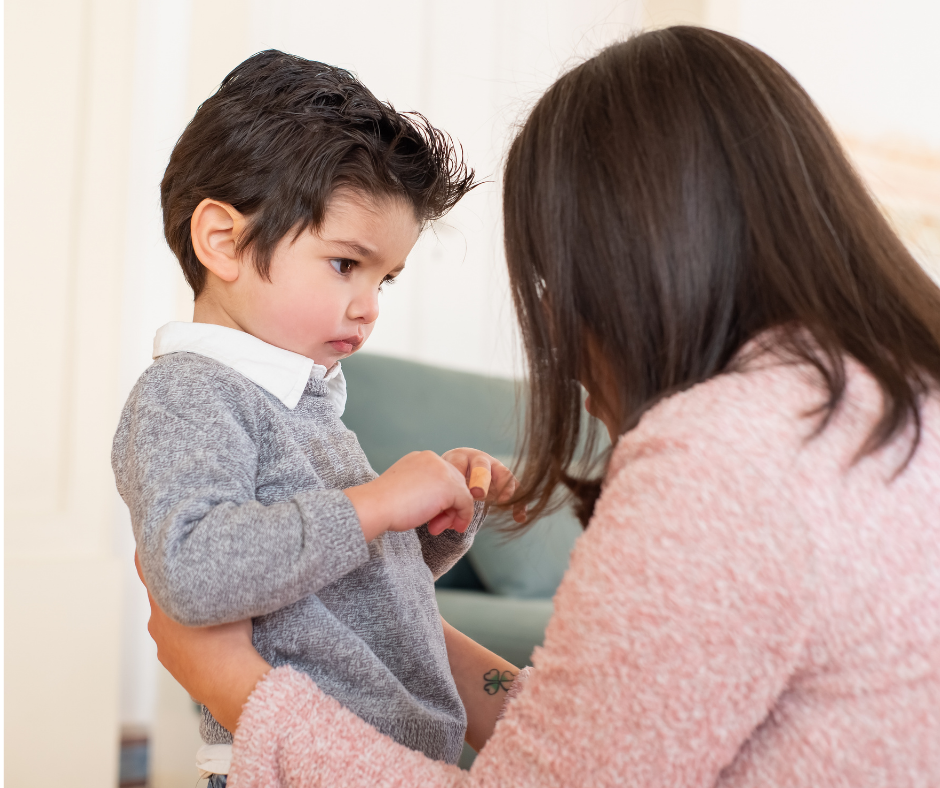
5. Use comforting touch, if wanted. A hug, a gentle squeeze, or a pat on the back can be comforting. Use the child’s nonverbal cues to determine if and when this is appropriate.
6. Offer strategies or “tools” in the moment. This might mean moving to a quieter space, offering a comforting object (e.g., a blanket or stuffed animal), getting a drink of water, or providing a calm space to decompress, such as lying down or sitting in a beanbag chair. When the child is more receptive, problem-solve with them by asking, “What can help you?”
Self-regulation and co-regulation are ongoing processes that require self-reflection, self-awareness, and an understanding of what works for each of us. What works for one individual may not work for another. Empathizing, connecting, and creating a safe environment for the child are key to helping children feel comfortable, regulated, and engaged.
Sources: Bornstein MH, Esposito G. Coregulation: A Multilevel Approach via Biology and Behavior. Children (Basel). 2023 Jul 31;10(8):1323. doi: 10.3390/children10081323.
Nadia is an occupational therapist, registered yoga teacher (RYT-200), and registered children’s yoga teacher (RCYT) with more than a decade of experience supporting individuals with disabilities. She founded CNTR Yoga in Deerfield to provide inclusive yoga for people of all ages and abilities and also works at a clinic in Lake Zurich focused on bridging service gaps across the lifespan. Nadia is dedicated to holistic care and believes in the lifelong benefits of yoga and occupational therapy.
We are a unique yoga studio catering to the needs of individuals of all abilities. At CNTR, we believe that yoga is for everyone, regardless of age, ability, or background. Our mission is to create a welcoming and inclusive space where every individual can experience the transformative benefits of yoga. Whether you’re a seasoned practitioner or stepping onto the mat for the first time, we’re here to support your journey to greater health, wellness, and inner peace.
The information and opinions presented in each blog post belong to each individual author. The purpose of C.I.T.Y. of Support’s collaborative blog is to help connect families and professionals to different community resources, and we do not specifically endorse any particular recommendations provided herein.